Reactions: New York, NY (1953)

This is the first report on this small journey of exploration. I call it small because at this time, my husband and I are traveling through the history of Art, learning and sharing what we have learned with each other and you.
I am starting with Abstract Expressionism because it is the beginning of a truly American Art group. The shift occurred with this New York School. Suddenly, Western Art moved its lens of concern to the USA. From this group, I chose to respond to “New York, New York “(1953) by Franz Kline. It now hangs at the Albright-Knox Gallery in Buffalo. It was created in New York and is oil on canvas. There is another painting by Kline with the same name that one made in 1958. The reaction to this painting went through different stages: initial questioning, subsequent appreciation and final understanding.


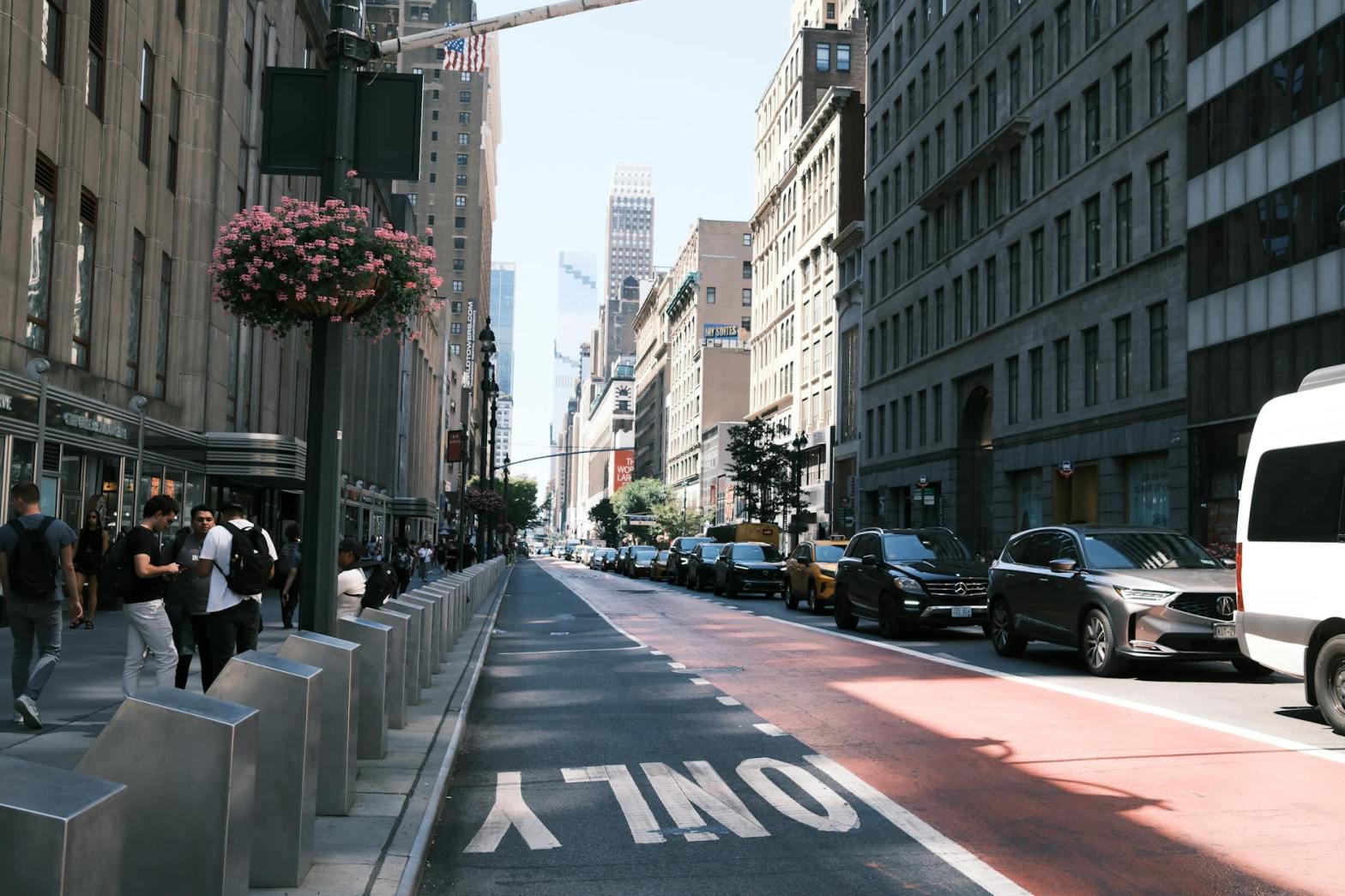
My initial reaction to New York city was quizzical. I was puzzled. At the same time, I felt hopeful and energized by the piece. Why did I come up with such a jumble of emotions? I think that I was perplexed because the painting was not obvious. I tried to find skyscrapers or something in the painting. The title was New York and that meant that it was supposed to be about New York. Was this painting what the artist saw when he looked at New York? I don’t think so. Maybe he looked at New York, had a reaction to it and then painted this work. Freed from the captivating threads of representation, Kline explored and rendered inner worlds and truths about the outer realm of New York. When the lines in “New York” moved upwards and horizontally, I felt surprise and excitement. My eyes moved up and down, left and right and then down to up on the page that showed the canvas. My eyes followed the thick black lines. So, I was really captivated by the upward slope of the two lines moving horizontally on a slight diagonal on the painting.  When there was an intersection the sudden stop surprised me. There was no yield in the lines. What I mean is that when one line intersected another,  neither bled nor smudged, nothing cracked or splintered, but all lines continued. Because of the way that the paint was laid on, it seemed to add to the drama of the painting. The tiny splatters made me visualize the artist’s brushes streaking across the canvas, leaving lines of thick paint, leading us in his frenetic exploration of New York. Interesting.


This painting is part of a style called motion painting I learned while writing this article.  Looking at this painting without visualizing the artist at work was really impossible for me. It is supposed to be a large painting and the lines are thick width wise and the paint is laid on thick. For these reasons, I imagined the artist working strenuously. Because of the way that the lines in the painting interacted and became all of the painting, my eyes moved all the time. There was no resting point. If there had been any color, that would have given me a place to land, but Kline wanted me to soar among the heights of New York. Kline passed away at 62 from heart trouble quite suddenly. There is more of his work to appreciate though. I can’t wait.


The Art of Two Kingdoms

Persepolis and Jerusalem in History and Now


In this time, I want to think about history so that maybe by recalling a time of peace, peaceful feeling can regrow. I know that our friends, family and descendants will think of us as peacemakers if we take this chance to remember the good moments in the history of two great peoples.

peace begins with an open hand


There are many people in the world at odds right now. Can art heal those rifts? Persia and Israel have long shared a love for art. Jewish and Persian artists shaped stone, building temples that will always astound the eye with majesty and brilliance. This love of precision stone craft and attention to the delicate nature of building took shape at different times. In Persia, the Darius Empire created Persepolis, while at the same time, in Israel, temples and monuments were erected and new care was given to the artisan crafts. 

It was Darius’s predecessor, Cyrus, who conceived the principles that would find their expression in the great palace and temple of Persepolis. Cyrus the Great was a Persian ruler that was loved by the Israelites because of his faithfulness to his promise that he would liberate them from Babylonian slavery if he won his war. This leader built relationships and ended a time of exile and disconnection. He began a time called the Persian Period in Jewish history.


Jerusalem’s Second Temple was rebuilt during this period. It was the chief place of worship for the Jewish people. Sacrifices were made at the temple by the people to atone for sin per the law. It was also a place of community, a place where people would gather to enjoy each other’s company. It was made of Jerusalem limestone with large Greek columns. It was on Mount Moriah which was the site of the temple originally built by King Solomon. The temple was large and beautiful using the principles of harmony and proportion. The same king, Darius of Persia helped build this temple while he finished construction on Persepolis.

My favorite part of Persepolis is its Gate of All Nations. It’s a gigantic gate that stands taller than seven men standing on top of each other’s shoulders. On each side of the gate there are two bulls frozen in an attitude of warning. These bulls are symbols of the power of the king and no doubt meant to awe visitors. This gate still stands and is an UNESCO site.

As this shows, artisans, architects and artists built the nations of Israel and Persia up rather than destroy them. In war, the only winners are the arms-dealers and those thirsty for the temporary glory of elusive control over people. The people left behind treasure their sons and daughters in life rather than in battle. We honor those who fight but don’t seek out war when peace is achievable.

So many years ago, Darius blended the art of the people in the Persian empire in order to show how each group was important and integral to the greater whole. Israeli leaders of that time sought to create works of art that called to mind the serenity and glory of deity. In so doing, they prevented a “cult of personality” to form in their nation. Leaders are remembered for how they stabilize their nations and bring prosperity, not by their battles. Can art remind each of us how beauty is fragile as the heart is fragile?

Local artists light up the internet with their work

Tracy Ellyn, ever friend, smart lady and all around sweet human being has a piece in The Healing Power of Color 2025. This is an exhibition shared with grateful folks like us by The Healing Power of ART & ARTISTS, an organization which runs an online gallery and promotes art managed by Renee Phillips. The exhibition runs from April 20 through June 20 of this year.

Ellyn’s watercolor Magic Soul Ride 2 is displayed virtually alongside works by Michael Amrose, Barbara Brown, Rahit Shah and others. The painting hypnotized me with its purplish center and extra circles radiating outwards in varying shades. Gary noticed that the purplish circle is in the perfect center of the painting. It was not a restive hypnotic trance, however, as the slices of blue, green and orange created conflict in me. On the left side of the watercolor deep, intense blues gather, while on the right, the blues are washed out and pale, as a line cuts through the middle of the painting in a downward diagonal. Ellyn mentions that “cool colors provide inwardly spiraling peace,” but set against the hot pink and orange, they gave me a feeling of anxiety. But the anxiety that the painting gave me was that which I get when I jump into a cool pool of water. It is exhilarating. Gary also liked it and commented on “the balance of the piece and its combination of warm and cool tones.” To see her work and the others’, visit the site at The Healing Power of Art and select “exhibitions” in the menu. Tracy Ellyn has her own site and can be found at Recent Works.

Marcelle Zanetti, a dear friend of Gary and me, is developing her stellar website. She has placed photographs of her paintings on her site. “My work spans realism to abstraction,” she said. The exactness of her work makes the ultra-realistic depictions of leaves, tree trunks and flower petals pop out of the canvas before the viewer’s eyes. Each leaf or vein in the tree trunk becomes its own separate organism. Plus, she creates in the large, giving the subjects even more power.

In an early piece, We Are Being Manipulated produced in 2023, Zanetti shows us the interior of what could be a room with some flowers on tabletops in crystal vases. The colors are vibrant but their shapes are indistinct, yet not fuzzy. It seems as if you’re looking at them through a wall of water, making them otherworldly and fantastical. The title of the work makes me think of a science fiction thriller, while the painting, as innocent as its subject seems, evokes a hidden anxiety as the blurred contours remind the viewer that all is not always as it seems.  Gary liked the piece a lot. Meanwhile, another work, Bougainvillea of 2024 is also evocative of dreamlife and trance which shows the Zanetti’s range. This painting like We Are Being Manipulated is very different from her work with lily ponds. They show a satisfying shift in her technique and her versatility. Gary loved the color. For more info about her paintings, see Marcellezanetti.com.