Pinecrest Gardens: Gallery Crawl 2023

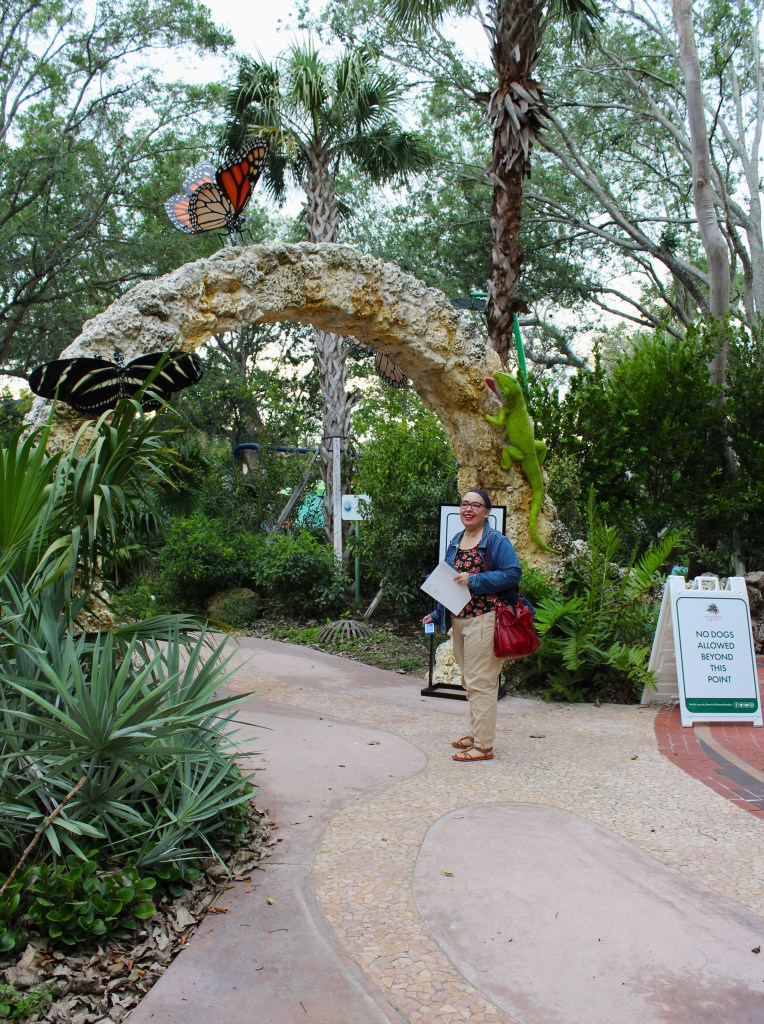
Pinecrest Gardens had an incredible event on April 15 that began at 5:00 PM. There were two people at the door receiving tickets and giving out coupons for the concession. There were over two hundred patrons casually dressed and enjoying themselves exploring art, learning about the environment and enjoying expertly created food, drink and music. Three buildings housed artworks. Each building contained works by a different artist. One building had Annette Bonnier, Xavier Cortada was in another and the main gallery had Artists Set the Table curated by Carola Bravo.

We met Cristina Blanco, the Director of the Gardens, who had been part of our correspondence and had told us of the event. She advised us on how best to enjoy the Special Exhibition. Blanco mentioned that we could begin at the Inspiration Center to see Bonnier’s collection of photographs, then walk back to Xavier Cortada’s showing at the Hibiscus Gallery and then cross to the Cypress Hall which showed the hARTvest collection.

Wildlife on Display

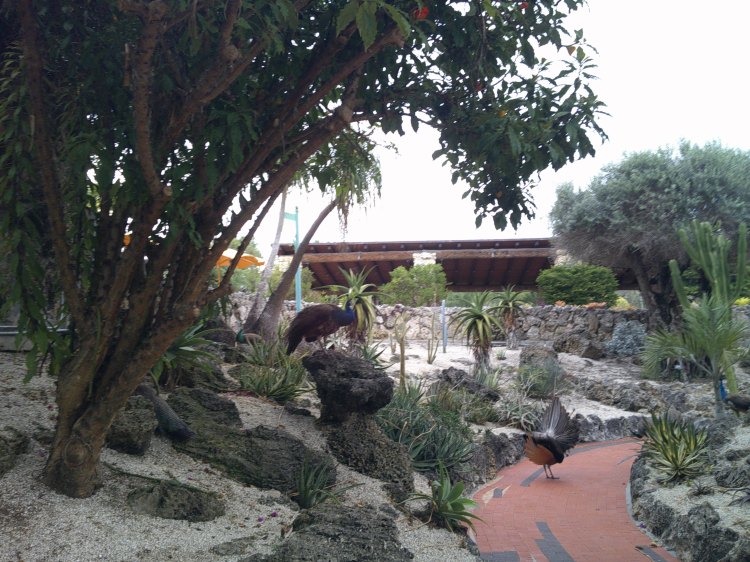
There was plenty to see between the buildings. The gardens have many tropical plants, some swans and many peacocks. An attendant mentioned that there were owls which were difficult to see because they tended to stay away from people. The peacocks kept making hissing noises and loud yells that sounded like women yelling for help. They watched me walk around and let me get quite close. The peacocks danced and spread their beautiful feathers. It was quite a display.

Digital Camera

Outdoor Exhibit Spotlighting Climate Change

Xavier Cortada’s work was displayed outdoors on the way to the Inspiration Center. It featured some flags and placards with numbers painted on them. Each number indicated how far underwater the ground would be if the current levels of climate change continued. Along with many scientists and experts, he is predicting a dangerous rise in the sea levels. This means that towns along the coast risk being flooded sooner than we would like. His work calls attention to the facts about our environment and the precarious conditions in which we live. He has visited many centers of political strength exhibiting his work and raising awareness.

He also had these interesting pieces. One was a large board with all of these note cards with small messages written on them. On each card, someone had written a note to another person living a hundred years from now. It had to be about the environment. I wanted to write something saying that the world was saved because the youth cared, but Gary said that the note cards were for kids and I shouldn’t write on them.

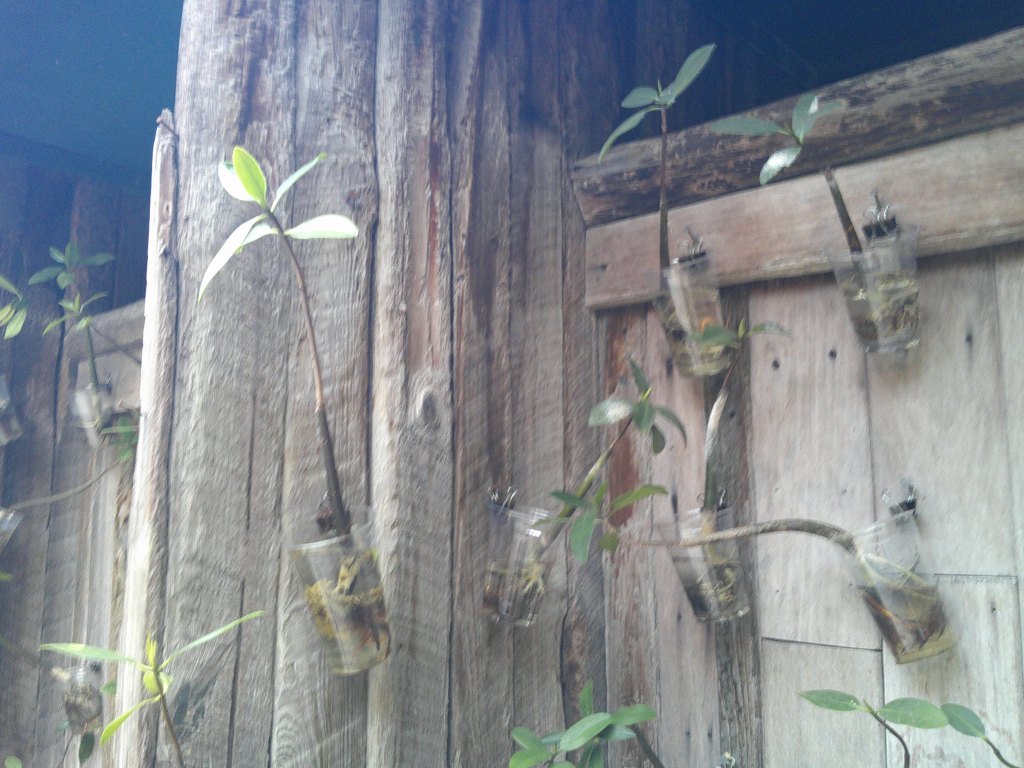
The other wall had containers with plants growing in them. Each of these plants were salt tolerant and could slow down erosion caused by water at the oceanside.

Digital Camera

Inspiration Center

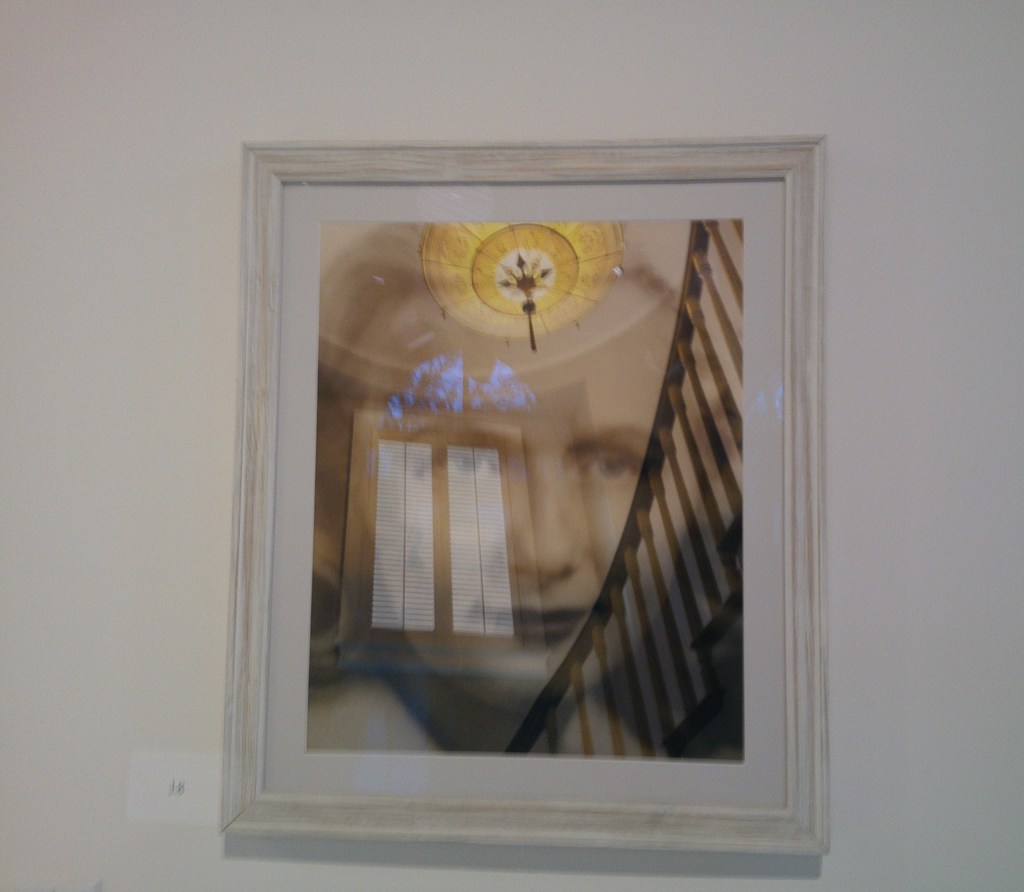
It was an honor and a pleasure to make the acquaintance of this talented, grounded and inspiring artist, Annette Bonnier. She talked to us candidly about her experience during the pandemic and what led her to create these “Reflections from the Shadows.”

Bonnier’s Reflections

When I took the picture here, I realized that there were so many layers in this image. The artist, Bonnier, had created the image which I had then photographed and now the computer is reproducing all of these times. It is so amazing to me.

Her work speaks to the resilience of the human spirit which can find beauty in the most difficult circumstances created by isolation, disease and loneliness. Her travels to Africa and Jamaica also inspired her to create impactful and humane images. Her tender smile and open nature drew me in and made me want to stay with her, talking about what really matters.

More information about her work can be found on her website AnnetteBonnierPhotography.com.

Hibiscus Gallery

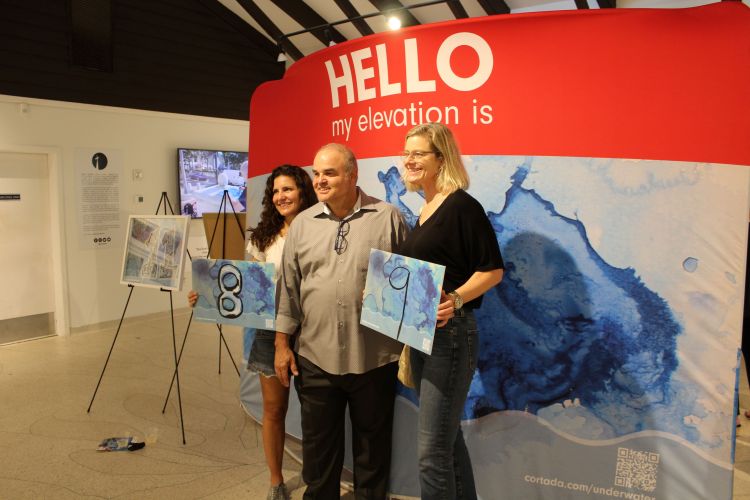
Elizabeth Heise, Xavier Cortada and Jill Reiter (l-r) © Helen Lemus, 2023.

This exhibit was entitled “Underwater Florida.” It featured the art of Xavier Cortada. Earlier in the article, there was mention of the symbolism of the placards with the numbers on them.

Here is his website that will explain more about his position on global warming and what each of us can do.

https://cortada.com/foundation/

Cortada is a highly involved member of the community who has long advocated for the protection of our living areas. He has given TED Talks, has spoken to government leaders and has worked with youth to call attention to our global village’s environmental needs. It was a pleasure to ask him a question and get a wry smile and a great answer.

Cypress Hall

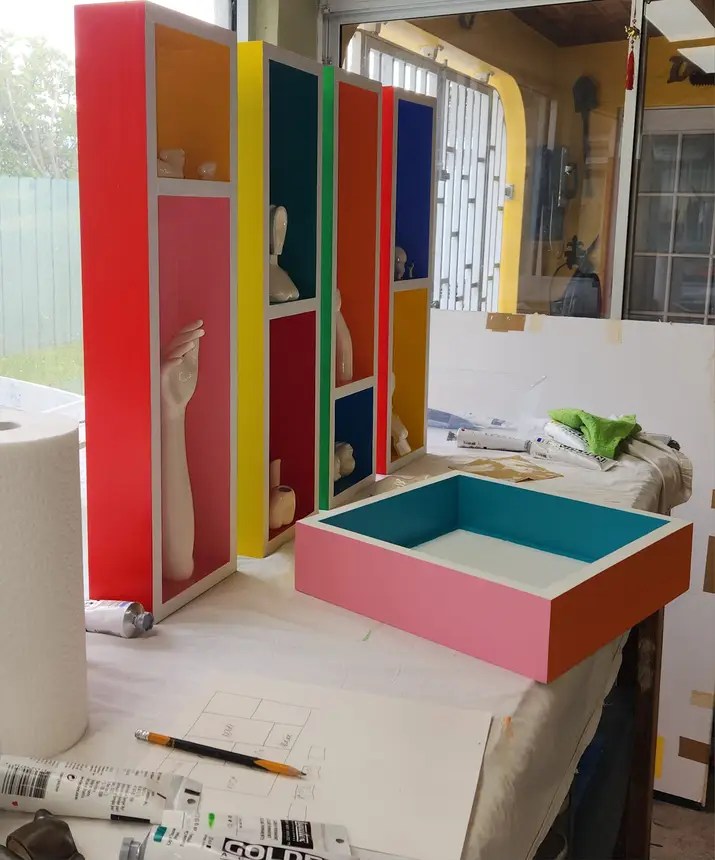
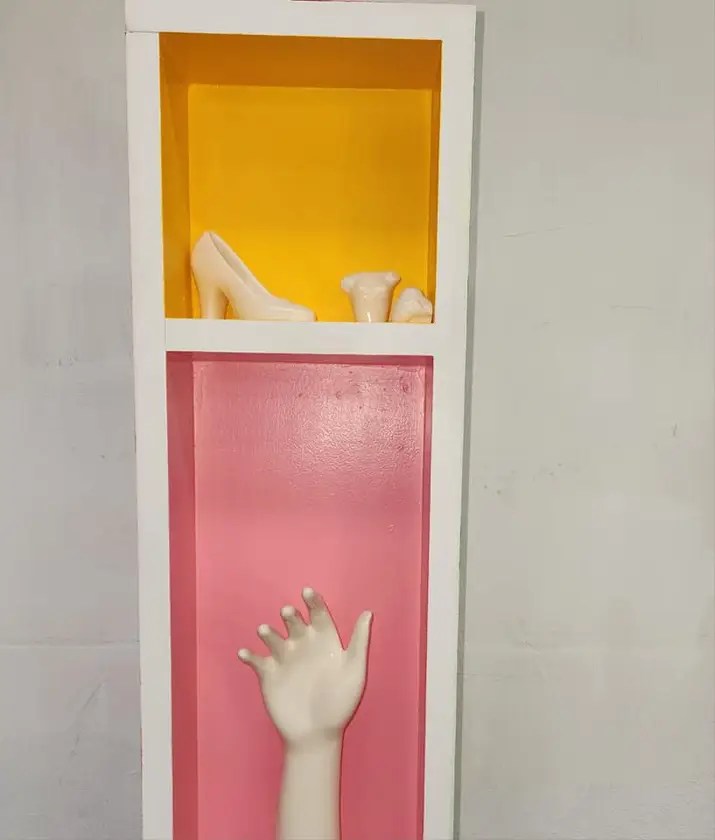
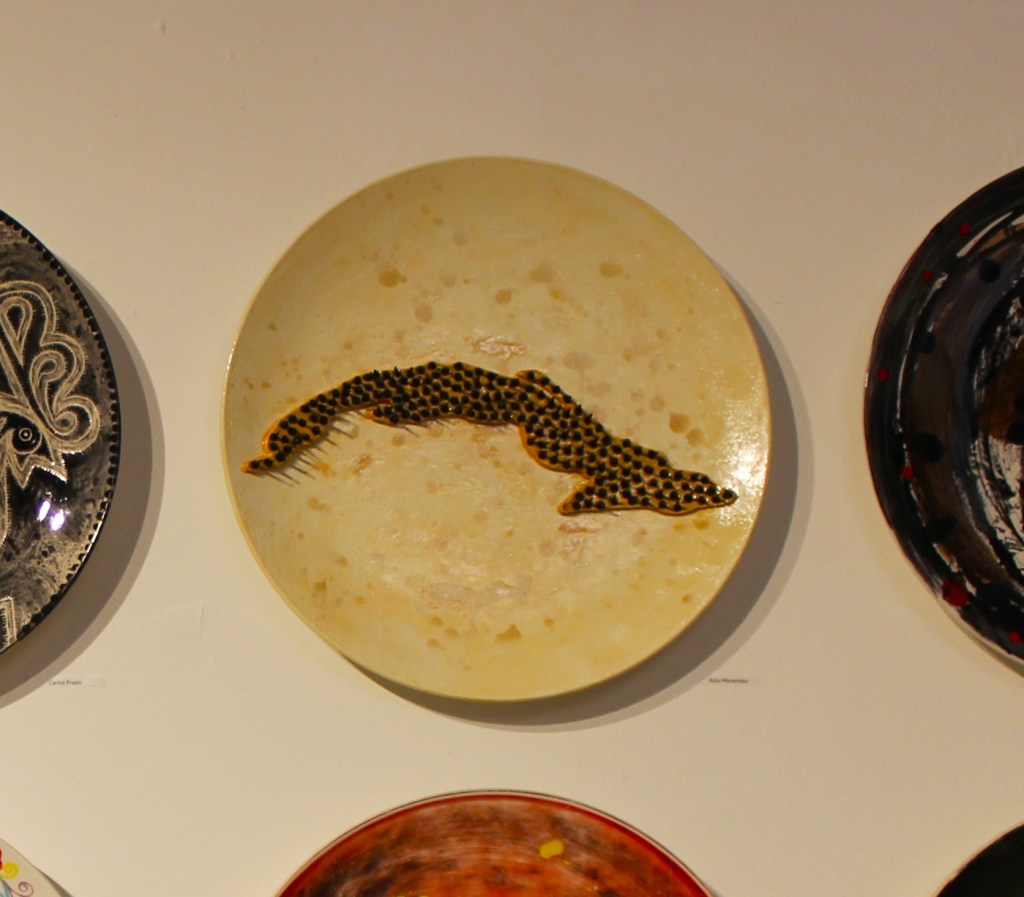
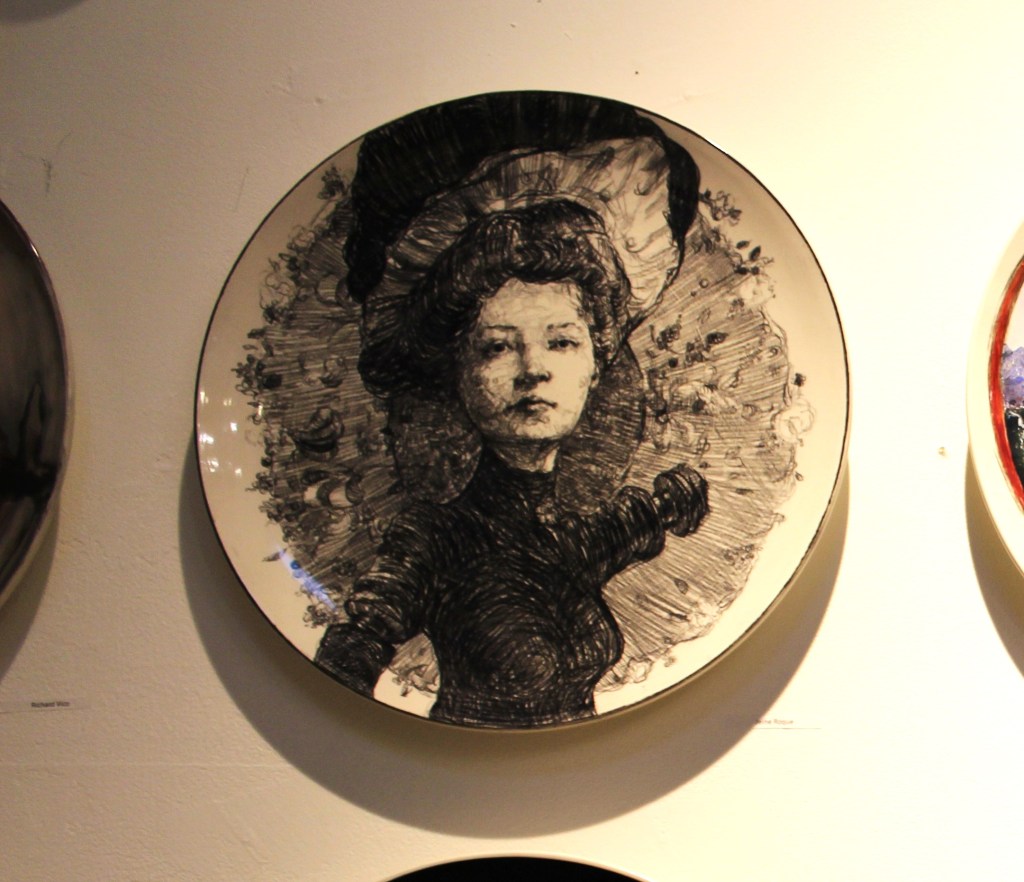
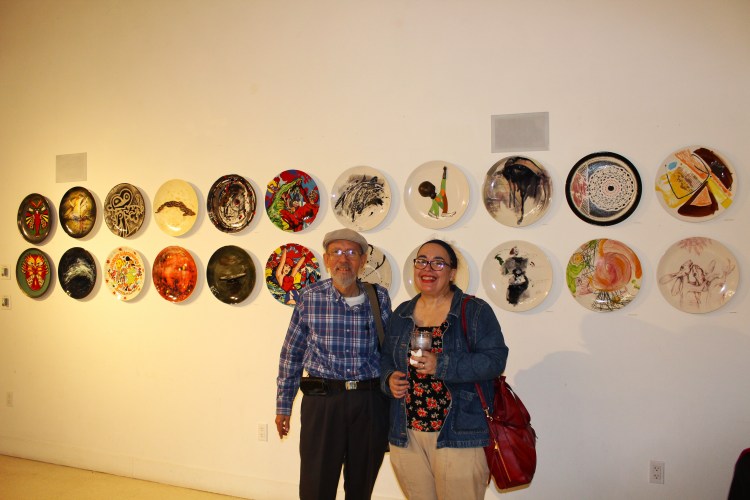
“Artists Set the Table” was a collection curated by Carola Bravo featuring the work of over 80 Cuban artists. These ceramics were as diverse as the individuals who produced them.

Gary and I were both amazed at the collection. Some of the plates were whimsical, funny, and provocative. Others were subtly charged and spoke of the same resilience and heart that has fueled the success of so many in the Cuban community.

It was so nice to spend some time with Yvonne Ferrer of the Museum of Contemporary Arts of the Americas. The warm-hearted passionate artist explained to us about the inspiration for her work with ceramic sculpture. During the pandemic, she and a fellow artist Evelyn Politzer created a heart-shaped work to express the need to care and show compassion for each other in concrete actions. She said the heart is the center of the emotions, is where pain and feelings dwell and is where life grows. She said that we all have a heart.

For more information about the museum check this link out:

https://www.mocaamericas.org/

It was such a great evening. I cannot wait to go back to the Gardens for another lovely time.

CINTAS All Stars Opening Night April 27

Coral Gables to Host Lifetime Achievement Award Winners

On Thursday April 27th the Coral Gables Museum will present the opening of a special exhibition featuring the work of notable Cuban American architects whose style and unique approach to building design has impacted the city of Coral Gables and other areas.

Titled “All Stars: CINTAS Foundation Fellows in Architecture & Design from 1963 to 2022,” the exhibition is a first time ever collection of work by fellowship recipients Jose Bernardo, Roberto de Alba, Raul de Armas, Andres Duany, Carlos Alberto Fleitas, Javier Galindo, Anthony Garcia, Jose Gelabert- Navia, Miriam Gusevich, Jorge Hernandez, Rolando Llanes, Adrian Lopez Gonzalez, Mario Miqueli, Ricardo Porro, Manuel Quijano, Nicolas Quintana, Raul Rodriguez, Alfredo Sanchez and Mario J. Torroella.

On display in the Gallery 109 and Abraham Family Gallery areas will be models, drawings, reports, photographs and videos drawn from the collections of the fellows and the CINTAS Foundation. Christina Chiang is the Curator of Architecture and Urbanism at the Coral Gables Museum and curated this exhibition.

Award Winners Display Variety of Styles

The architects, Javier Galindo and Miriam Gusevich, are but two whose work display the great variety of styles which will be featured at the exhibition.

Javier Galindo

Javier Galindo was born in Havana, earned a Masters of Architecture from Cornell University and a Bachelors of Architecture from FIU in Miami. Currently based in New York and has practised with firms in Miami and San Francisco as well. He received the 2015 Rome Prize in Architecture, the KPF Traveling Fellowship, and several competition awards and recognitions.

Miriam Gusevich

Miriam Gusevich, also Cuban born, is an urban designer, scholar, and teacher, with a lifelong commitment to public interest design. She is the founding principal at GM2 Studio and CEO of Restoring our Places, an NGO. She received her Masters and Bachelor’s in Architecture from Cornell University and was a Loeb Fellow at Harvard University.

The opening night event will take place from 7 to 9 p.m. The exhibition will be on display until July 30 of this year.

Images are representative of works by these architects and designers. Web designer does not hold copyright to these images.

CINTAS Foundation is now accepting applications for fellowships!

Final call. Application deadline is May 1 st, 2023. Applications in Spanish will be accepted.

https://cintasfoundation.org/fellowships/architecture-and-design-fellowship

Good Luck!

By Gary Alan Ruse, 2023. Gary@rulecreations.com

Coral Gables Museum January Gallery Night

Gallery Night is scheduled for Friday, January 6th at the Coral Gables Museum. The event will take place between 7:00 p.m. and 9:00 p.m. for the enjoyment of the public. The Florida Guitar Foundation will have an open mic, there will be live music from Purpleberry Jam and there will be four gallery exhibitions.

The Florida Guitar Foundation regularly invites guitarists who enjoy playing classical guitar to their open mic events. They are for guitarists of all skill levels to perform and learn from each other. Upcoming Open Mic nights will be January 6th, February 4th, March 4th, April 4th and May 6th at the Coral Gables Museum. To find out about this contact Federico Muskgrove Stetson at Frederico@Floridaguitar.org, the director of the program, or just the organizations box at info@ Floridaguitar.org.

Performing this month at the live music session will be Purpleberry Jam from Doral. They enjoy playing covers of Santana, Jimi Hendrix and Pink Floyd as well as performing their own music. Their music is a blend of funk, R&B, and rock with a modern twist. They combine mild distortion on guitar with driving beats and a danceable feel on drums that will excite and relax simultaneously. Ms. Betancourt shared her bluesy voice that caresses the soul out of its sleepiness. She played with them a few years back, and I don’t know if she will sing tomorrow night. It should be a pleasant surprise for everyone.

Purpleberry Jam

As a counterpoint to the musical events’ auditory vibes, the museum will offer visual stimulation in its current exhibitions. The art on display features a series of striking mixed media engravings and one sculpture by Haitian-American artist Edouard Duval-Carrié, tapping into the history, literature and mythos of the Caribbean. Also presented is an array of images in the collection of Raúl and Mily de Molina from their world travels, featuring 29 outstanding international artists.

The event is free to the public.

Uruk Vase Reveals Order of the Cradle of Civilization

Backstory

What is known as the Urban Revolution started in Mesopotamia about five thousand years ago. People started to move to cities because of the area’s abundant resources. Their basic needs met, the inhabitants of the place could allow their talents to flourish. Writing was invented by the Sumerians. In this place, known as the fertile crescent, the first stone tablets with writing that have been found record real estate transactions.

Map of Ancient Mesopotamia showing location of Assyria, Babylonia and Sumer.
The Cradle of Civilization

In the desert world of Mesopotamia, complex systems of trade existed between what is now Pakistan, Iran and Iraq. They had to be able to track ownership of goods, so writing was invented. This influences the Art of the period. Mesopotamia was located in the rich soil between the Tigris and Euphrates rivers in what is now Syria, Iraq and Jordan.

The Uruk Revolution

Art historians call that time the Uruk Revolution. They call it a revolution because it was the first time that people lived together in urban cities. The Uruk Vase was created about 5,000 years ago in the largest city of its time, a place known as Arak in the Bible but Uruk in other places. Gilgamesh of legend built the city walls.

Symbols on the Vase

At a little over a meter high, the vase is sculpted out of alabaster, a precious stone of the time. Because alabaster was so hard to find, it is commonly thought that the vase served a ceremonial purpose. The story that it tells in its carved exterior reveals the spiritual beliefs of the people who made it and much about the social structure of its makers.

The vase displays a hierarchical view of the world. The carvings that are arranged in levels around the circumference of the vase display that hierarchy. First, the lower of its multiple sections has water which is the basis of life, then plants, and male and female sheep. Scholars believe that these were placed on the vase to symbolize what the greatest concerns were for the people of that community: their harvests and their livestock.

The water is the source of all life and for an agrarian community like that of Uruk, its importance had to have been deeply felt. So, on the vase, the base on which all else stands is a depiction of water. Above that are all the plants that the people’s livestock ate. Then, there is a row of sheep. The next level has a series of people and the top level has a carving of the Goddess Innana. She was the fertility Goddess of Sumeria.

Bas relief stone sculpture of Ancient Sumerian Goddess of Fertility, Innana. Goddess is depicted naked holding metal objects in her hands and a headdress on her head.
Goddess Innana

Another important facet about the symbolism located on the vase is found on the top level. Located in the top section of the vase, there is a King and the Goddess Innana celebrating a marriage ceremony. The Kings exerted control over the people of Uruk by tying their rule to the Goddess. They claimed that because they were married to the Goddess, they were of divine nature and deserved their status in society. Also, by tying the land to the King’s health, he could say that if he was not well cared for, the land would suffer thereby keeping himself well maintained through fear.

Finally, the Uruk Vase shows an orderly arrangement of the world. It represents an age in which there was a definite line between truth and fiction. Later, doubts and skepticism about the nature of reality came into the human culture, but at that time, there was an order to life that the Uruk Vase depicted.

One of the sources for this post is this video by Diana McDonald. Video

Is this your new site? Log in to activate admin features and dismiss this message
Log In